
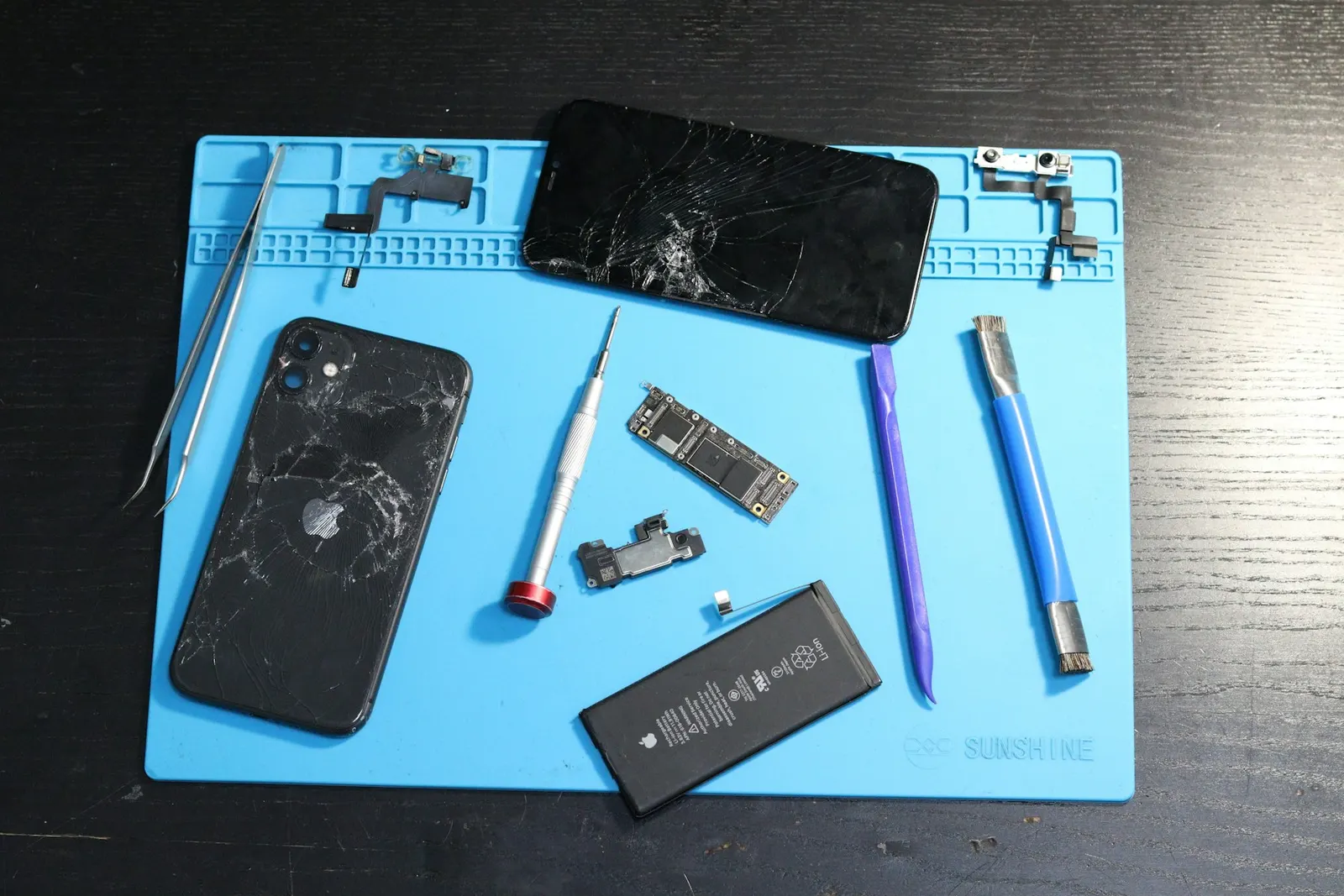
Fast charging has become standard on almost every mid-range and flagship phone sold in India today. From Redmi's 67W charging to OnePlus's 80W SuperVOOC, the numbers keep climbing. And with every new spec sheet, the same question arrives at our Keshavpura counter: "Sir, this fast charging will damage my battery?" Here is what we actually see in practice.
How Fast Charging Works
Standard charging delivers power at a constant, lower wattage. Fast charging works by increasing the current or voltage, or both, in the early phase of charging (roughly 0% to 60-70%). Once the battery approaches full, the charger automatically reduces to a trickle to avoid stressing the cell. The phone's charging IC and the charger communicate continuously to manage this.
This means the high-power phase is actually quite short. Going from 20% to 80% happens fast; the last 20% takes much longer by design. This approach minimises the time the battery spends absorbing high energy, which is smart engineering.
So What Is the Actual Risk?
The real concern with fast charging is heat. Every lithium-ion battery generates some heat while charging, and faster charging generates more. Sustained heat above certain temperatures accelerates the chemical degradation inside the battery cell. Over many charge cycles, this causes:
- Faster loss of maximum capacity
- Increased internal resistance
- In severe cases, swelling of the battery
However, there is a critical point here: the heat problem is far worse when you use fast charging in a hot environment. Charging your phone in an air-conditioned room is quite different from charging it sitting on a metal surface in a 45-degree Kota summer afternoon with a thick case on.
What Phone Brands Do to Manage Heat
Every reputable brand builds in thermal management. Sensors inside the phone monitor battery temperature in real time. If the temperature rises too high, the charging speed is automatically reduced, even mid-charge. You may notice the charging slowing down on a hot day; that is intentional and protective.
Some brands go further. OnePlus splits the battery into two cells so current through each cell is halved, reducing heat. Oppo and Vivo have moved part of the charging management into the adapter itself. These are genuine engineering solutions, not marketing.
Practical Habits That Make a Difference
- Remove a thick case when fast charging: The case traps heat around the phone. A thin case is usually fine.
- Do not charge and game simultaneously: The processor and display generate their own heat; combined with charging heat, this adds real stress to the battery.
- Avoid charging in direct sunlight: Even a short time in strong sun raises the starting temperature significantly.
- Use the original charger: Third-party fast chargers that are not certified for your phone's protocol may not communicate correctly with the battery IC, leading to improper charging behaviour.
- Enable battery protection modes: Many phones, especially Samsung, OnePlus, and Realme, allow you to cap charging at 85% for daily use. This reduces the number of full cycles significantly.
How Fast Does a Battery Degrade?
A typical smartphone battery is rated for around 500 full charge cycles before noticeably losing capacity. If you fast-charge carefully (cool environment, original charger, no simultaneous heavy use), degradation is comparable to slow charging. If you fast-charge in hot conditions repeatedly, degradation is measurably faster, our technicians see this regularly in phones brought in by coaching students who charge at full speed throughout the day.
| Charging habit | Estimated battery life impact |
|---|---|
| Standard charging, good conditions | Baseline, typically 2-3 years to noticeable loss |
| Fast charging, cool environment, good habits | Comparable to standard charging |
| Fast charging, hot conditions, case on, charging while gaming | Noticeably faster degradation |
When to Get the Battery Checked
If your phone is one to two years old and you notice it is draining significantly faster, or it shuts down unexpectedly at 20-30%, bring it in for a free check. We can assess actual battery health and let you know if a replacement is worth it.
| Battery replacement | Typical cost range |
|---|---|
| Redmi, Realme, Vivo, Oppo | ₹500 - ₹1,000 |
| Samsung mid-range | ₹800 - ₹1,500 |
| OnePlus, Samsung flagship | ₹1,200 - ₹2,500 |
| iPhone | ₹1,500 - ₹2,800 |
Exact pricing is confirmed after a free check-up, as it depends on the specific model and part availability.
Our honest conclusion: fast charging is safe when used sensibly. The technology is mature, the thermal protections are real, and the convenience is genuinely useful. Just keep the heat down, use the right charger, and your battery will hold up well.
Frequently asked questions
Is it safe to fast charge every day?
Yes, if you use the original charger in a reasonably cool environment without heavy simultaneous use. The thermal management built into modern phones handles normal daily fast charging well.
Should I use slow charging at night to protect the battery?
It is not essential on a modern phone with optimised charging. Enabling the battery protection or adaptive charging feature in settings is more effective than manually switching chargers.
Does wireless charging damage the battery more than fast charging?
Wireless charging generates some heat from the inductive transfer, which can affect battery health. Standard-speed wireless charging is generally fine; very high-wattage wireless charging carries similar heat considerations as wired fast charging.
My phone gets very hot while fast charging. Is that normal?
Mild warmth is normal. If the phone becomes uncomfortably hot to hold, something is wrong, the charger may not match your phone's protocol, the battery may be degraded, or there is a hardware issue. Bring it in for us to check.
Will a third-party fast charger work?
Only if it is certified for your phone's specific fast-charging protocol (e.g. Qualcomm Quick Charge, VOOC, SuperDart). A generic 65W charger will not necessarily fast-charge a VOOC phone safely.
Questions & comments
Ask our Kota technicians anything about this repair. All posts are reviewed before they appear. For an urgent quote, WhatsApp us.
No comments yet, be the first to ask a question.
Leave a comment or ask a question
First, verify your email. We send a 6-digit code so we know you are a real person. Your email is never shown publicly.
Enter the 6-digit code we emailed to .