
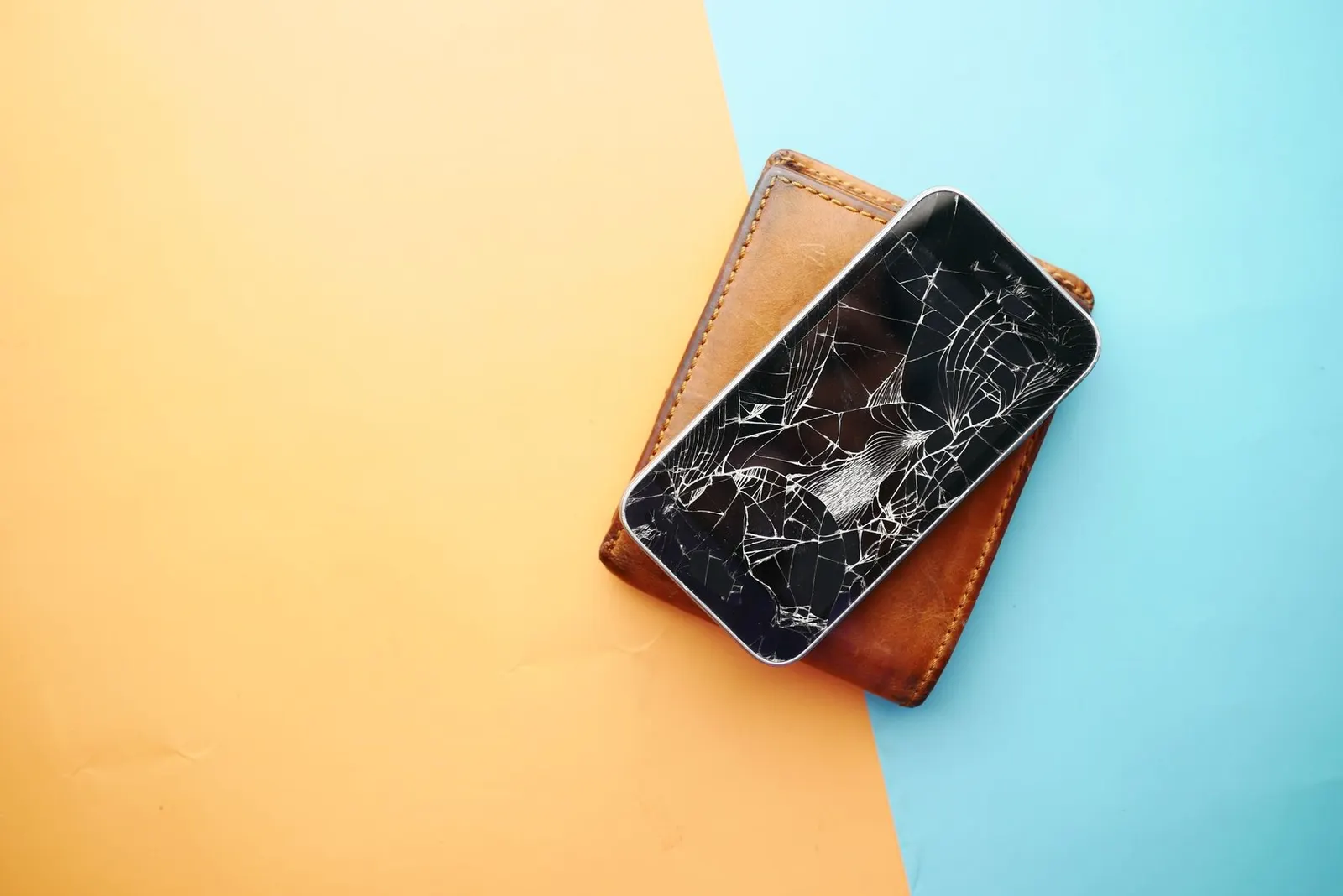
At our Keshavpura shop in Kota, we replace dozens of cracked screens every month. Looking back at each case, one pattern stands out clearly: customers with proper protective cases rarely crack their screens, while customers with thin decorative covers or no case at all come in far more often. Good protection genuinely prevents most screen damage, and it costs a fraction of what a screen repair does.
Case Types: What Actually Works
Thin TPU or Silicone Cases
Flexible rubber or TPU cases are the most popular and offer reasonable everyday protection. They absorb moderate impacts reasonably well, are slim and comfortable to hold, and are affordable at ₹100-300. The limitation is that very thin silicone cases offer minimal protection from straight drops onto hard surfaces, they flex but may not absorb enough energy.
Dual-Layer or Hybrid Cases
These combine a soft inner TPU layer with a harder polycarbonate outer shell. The two-layer design converts more kinetic energy from a drop into heat before it reaches the phone. These are significantly more protective than thin cases and are still reasonably slim. Price range is ₹300-800. This is what we recommend to coaching students in Kota who carry their phones constantly and are more prone to accidental drops.
Rugged or Military-Grade Cases
Rugged cases are thick, sometimes adding 4-6mm to the phone's profile, but they provide the best drop protection available. They are worth considering for people who work outdoors, in construction, or in environments with a lot of physical activity. Price range ₹600-1,500. The trade-off is the bulk.
Thin Fashion Cases or Designer Covers
Crystal-clear thin cases, fashion cases with patterns, and hard slim plastic covers look attractive but offer minimal real protection. They protect against minor scratches on the back panel, but they do very little in a genuine drop. We see many cracked screens in phones that had these cases on them.
Leather and Folio Cases
Flip cases and wallet cases protect the screen when closed, which is useful if you habitually slide your phone into a pocket face-first. However, they do not protect the phone well when it falls face-down while open, and the hinge point can be a weakness. Good for scratch protection; average for drop protection.
The Raised Lip. Why It Matters
The most important feature to look for in any case is a raised lip around the screen edge. This small ridge means that when you place the phone face-down on a table, or drop it face-first, the case lip contacts the surface before the screen glass does. Without a raised lip, the glass itself takes the impact. Most quality cases have at least 1mm of raised lip; 1.5-2mm is better for meaningful protection.
Screen Protectors: Tempered Glass vs Plastic Film
Tempered glass screen protectors are significantly better than plastic film for protection against scratches and impacts. When a sharp corner hits the screen, tempered glass absorbs and distributes the impact energy; plastic film does not. Tempered glass costs ₹150-400 in Kota's markets and at shops like ours. Plastic film costs less but offers far less protection and collects micro-scratches quickly.
Some tempered glass options now include anti-fingerprint coatings and edge-to-edge coverage. For phones with curved screens, choose a curved tempered glass specifically made for your model to ensure proper edge-to-edge coverage.
Camera Lens Protectors
Rear camera glass is a common point of damage, it sticks out slightly from the body on most modern phones, making it vulnerable when the phone is placed on rough surfaces. Tempered glass camera lens protectors for your specific model are available for ₹100-250 and are excellent value given that camera glass replacement costs ₹400-1,200.
Protection Cost vs Repair Cost
| Protection Item | Typical Cost | Repair It Prevents | Repair Cost Saved |
|---|---|---|---|
| Quality dual-layer case | ₹300-800 | Screen crack | ₹1,500-8,000 |
| Tempered glass | ₹150-400 | Screen scratch/crack | ₹1,500-8,000 |
| Camera lens protector | ₹100-250 | Camera glass replacement | ₹400-1,200 |
The maths are clear: a few hundred rupees spent on good protection can save several thousand rupees in repair costs. We sell and apply quality tempered glass and camera lens protectors at our Keshavpura shop, and we can advise you on the right case type for your phone model and usage pattern.
Frequently asked questions
Is a more expensive case always better protection?
Not necessarily. Price does not always correlate with protection. What matters most is the case design: raised lip, dual-layer construction, and corner cushioning. A ₹400 TPU case with good corner protection can outperform a ₹800 fashion case with thin flat sides.
My phone is IP68 rated, do I still need a case?
Yes. IP ratings cover water resistance under specific controlled conditions and say nothing about drop protection. IP68 also does not protect the screen from cracking. Even waterproof-rated phones benefit greatly from a case for drop protection.
How often should I replace a cracked case?
A case with cracks, broken corners, or compressed padding has already absorbed impacts and will not protect as effectively for the next drop. Replace it. The cost is always far less than what it is protecting against.
Does applying tempered glass yourself make it less effective?
Self-application is fine if done carefully, but air bubbles near the edges or dust trapped underneath reduce adhesion and can leave the edge uncovered. We apply tempered glass at our shop with no bubbles for ₹100-150 for the labour, included with the glass purchase.
Are pop-socket grips good for preventing drops?
Pop-socket style grips improve your grip significantly and genuinely help prevent drops in the first place, which is even better than surviving a drop. Use them in combination with a case, not as a replacement for one.
Questions & comments
Ask our Kota technicians anything about this repair. All posts are reviewed before they appear. For an urgent quote, WhatsApp us.
No comments yet, be the first to ask a question.
Leave a comment or ask a question
First, verify your email. We send a 6-digit code so we know you are a real person. Your email is never shown publicly.
Enter the 6-digit code we emailed to .